
We’re in the middle of Oscar season, and we’ve had the privilege of being able to see many of the Oscar nomination hopefuls already. Many films hope to make an appearance at the March 2, 2025, ceremony, but we’ve reviewed three of them for now.
The Brutalist
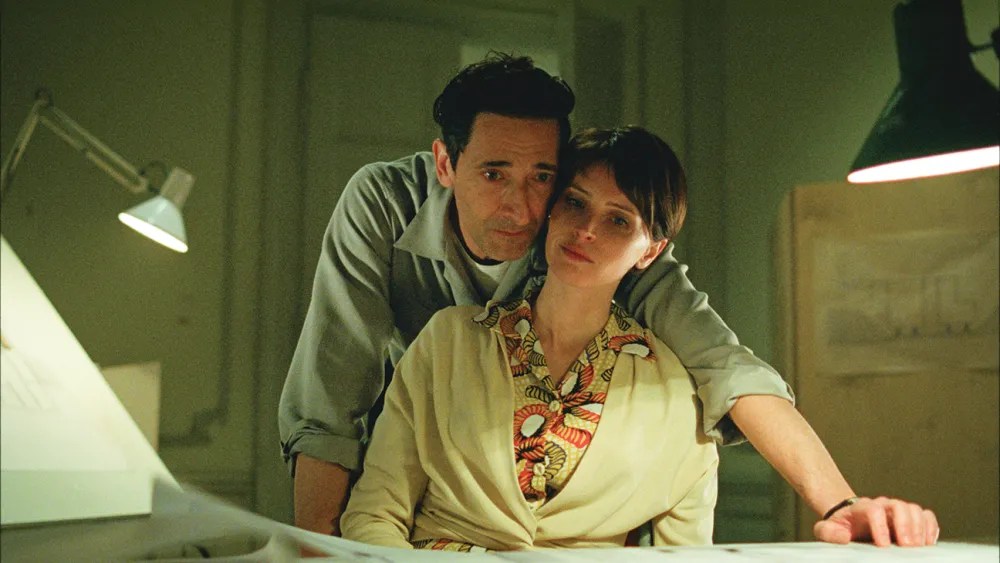
Distribution Studio: A24 (USA) Director: Brady Corbet
The Brutalist came out swinging last month with a memorable “teaser” trailer and has had nothing but glowing reviews after screening at the Venice Film Festival, TIFF, and countless other festivals across the United States. It’s easy to be skeptical when something is labeled as an Academy Award front-runner when a wide-release date is still fuzzy. After having the opportunity to see The Brutalist early, shout out to the St. Louis International Film Festival (SLIFF) for showing this film twice, I’m here to say the early reviews aren’t hyperbolic.
Brady Corbet’s decade-spanning epic was a uniquely immersive experience. I call it unique because its immersive elements weren’t bombastic, its immersive elements were the subtlety of the dialogue, the beauty of letting scenes breathe, and how lived in the performances and characters felt. The film’s expansiveness was also something to behold, and the confidence and clarity in its ideas excited me. It concerned itself with American consumerism, corporate greed, loss of culture, religious differences, socialism, racism, xenophobia, the opioid crisis, and more, and not once did the surfacing of these topics feel forced or contrived.
The cinematography, the editing, the screenplay, and the hypnotizing score were all done with such care that the end result was meaningfully special, not just something Corbet wanted to show off. Adrien Brody, Guy Pearce, and Felicity Jones gave career-best performances; I don’t think there’s a single acting performance this year that is even close to what Brody was able to accomplish as Lászlo Tóth. Do not let the length of The Brutalist scare you. I found it astonishing that something so long and dense could feel perfectly paced. A tasteful and necessary 15-minute intermission is included in the 3-hour and 35-minute runtime.
The Brutalist feels like a classic film you might have seen in the 40s and 50s, but it’s also one of the more modern and most relevant films you’ll see all year. This cohesion of different time period sensibilities has been a sticking point for why so many people hold The Brutalist in such high regard.
Since we’re talking Oscar-hopefuls, I think you can permanent marker in The Brutalist with nominations for Best Picture, Best Director, Best Actor (Brody), Best Supporting Actor (Pearce), Best Supporting Actress (Jones), Best Original Screenplay, Best Cinematography, Best Editing, Best Product Design, and Best Score. So, only a few nominations.
9.7/10
Emilia Pérez
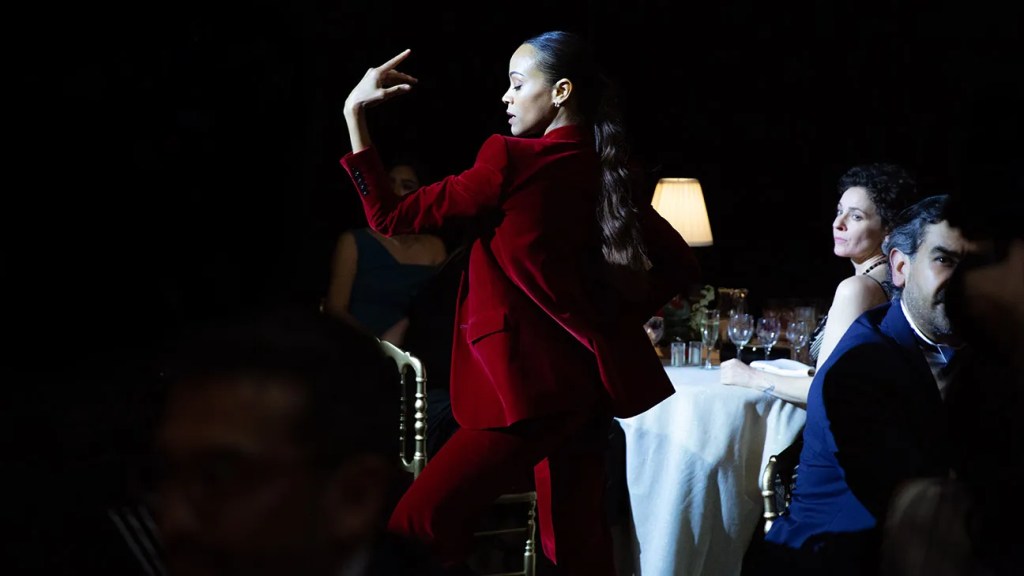
Distribution Studio: Netflix (USA) Director: Jacques Audiard
To my present self’s dismay, people left the Cannes Film Festival and TIFF buzzing about Jacques Audiard’s Emilia Pérez. The film even took home the Jury Prize award and Best Actress Award at Cannes. It should be noted that Best Actress went to the combined efforts of Zoe Saldaña, Selena Gomez, Karla Sofía Bascón, and Adriana Paz. While there have been countless supporters of the film, many trusted critics came out of the Cannes premiere not so high on Emilia Pérez. I firmly stand in the “not so high on” camp. To be honest, I’m more in the “I strongly dislike this movie” camp.
There’s much to say about how and why Emilia Pérez doesn’t work for me, but I’ll leave it to a few main things. What made me squirm the most was its treatment of the trans experience. With this being such an important catalyst for the film, it’s insulting how reductive the movie is regarding the life experiences of a trans woman. At no time is there any compelling evidence that the filmmakers care about the topic that their movie is about; the “transness” only feels like a plot device to trick viewers into thinking they’re watching something important.
It must be mentioned that Emilia Pérez is a musical, but rather than the musical numbers being a highlight, they are used to mask how thin the screenplay and script are.
It was frustrating that the only way meaningful character emotions, traits, and thoughts were given to us was through half-baked songs. It was as if Audiard didn’t trust his flimsy dialogue enough to do any heavy lifting. Emilia Pérez, although very loosely based on the novel Ecoute, doesn’t seem to have any end goal in mind, and as a result, suffers immensely from a lack of tension and makes it difficult for an audience to care.
Zoe Saldaña is the only bright spot of the film and she does the best she can with the little she has to work with. I was also impressed by her singing abilities. On the other hand, I found Selena Gomez to be difficult to watch, especially when going toe-to-toe with the far more capable Zoe Saldaña. Her performance suffers from a lack of understanding of the emotional stakes, and her stilted performance, coupled with stilted dialogue, makes for an unpleasant viewing experience.
Because of the intentional cruelness of the film, the conversations it has stirred up, and the precedent that has already been set at Cannes, I see Emilia Pérez taking up nominations for Best Picture, Best Director, Best Actress (Bascón), Best Supporting Actress (Saldaña), Best Adapted Screenplay, Best Cinematography, and Best Song. Bummer.
3.0/10
Sing Sing
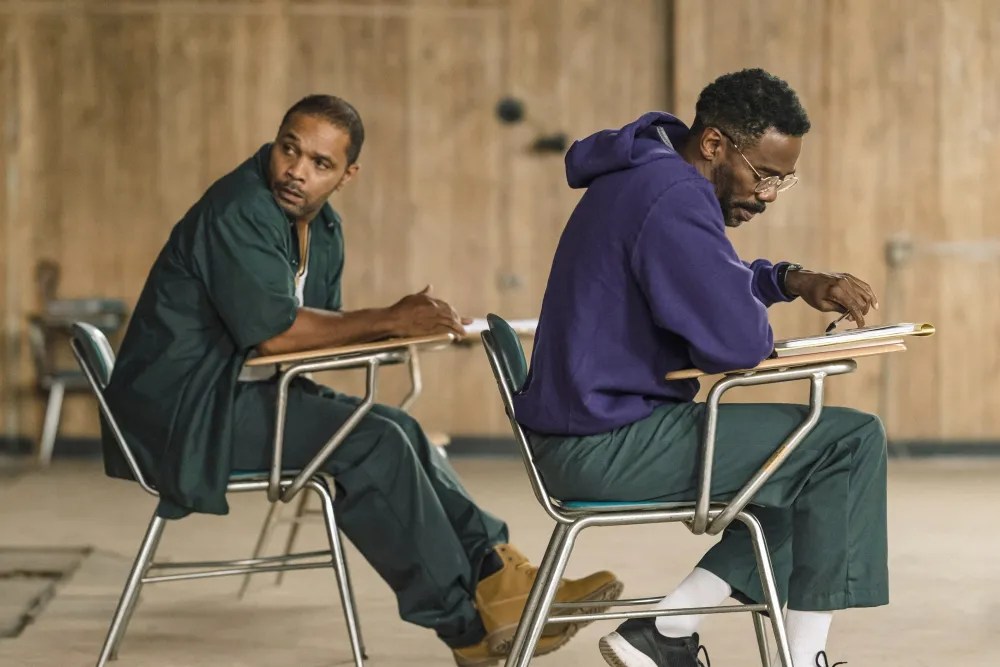
Distribution Studio: A24 (USA) Director: Greg Kwedar
Based on the real-life Rehabilitation Through the Arts (RTA) program at Sing Sing Maximum Security Prison, Sing Sing so eloquently tells the story of the making of the real RTA original, Breakin’ the Mummy’s Code. Even though the development of this production is something for Sing Sing to center around, it cares more about the prisoners, how they’re dealing with their current circumstances, and how they interact with each other.
The stories of these men are frustrating; many of them are in prison longer than they should be, and in the case of Colman Domingo’s Divine G, some have been incorrectly incarcerated. It’s a harrowing balance of trying to do what you can to fight the system internally, while also trying to make the most of your life while imprisoned. Immersing themselves in theater allows them to not only learn more about themselves and each other, but it gives them something to dream about.
To properly and more authentically portray this story to an audience, the filmmakers decided to make use of neorealistic film techniques. Sing Sing was filmed at the decommissioned Downstate Correctional Facility in New York, and nearly the entire cast, except Colman Domingo and Paul Raci, were formerly incarcerated. Many of the prisoners played themselves in the film and were participants in the RTA programs at their correctional facilities.
It’s an impressive cast, especially when considering most of the actors are in their first film. The rawness in which they all portray their stories and their truths makes Sing Sing soar emotionally while still allowing the viewer to find comfort in the happy moments. For such a heavy film, it is chock full of these moments. The brotherhood these men form through their shared experiences and appreciation of theater is powerful.
The entire film is a showcase for Domingo’s incredible acting abilities, and he is all but certain to get a Best Actor nomination at the next Academy Awards. But he might not be the only actor honored. First-time actor Clarence Maclin gave an equally impressive performance, and I’d love to see him nominated for Best Supporting Actor. Just those two nominations wouldn’t be doing Sing Sing justice, and I believe it’s deserving of both a Best Adapted Screenplay nomination and a Best Picture nomination.
9.3/10
Written by: Stefano Todaro

 POPCORN FOR BREAKFAST
Leave a comment