
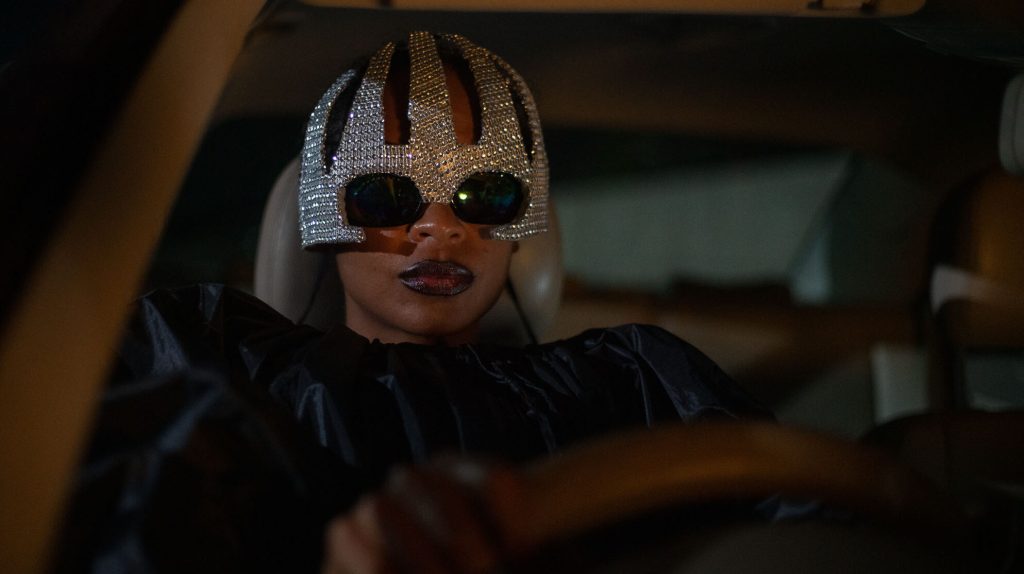
Movie: On Becoming a Guinea Fowl (2025)
Production Companies: Element Pictures, A24, Fremantle, BBC Film
Distributed by: A24
Producers: Ed Guiney, Andrew Lowe, Tim Cole
Directed by: Rungano Nyoni
Written by: Rungano Nyoni
Starring: Susan Chardy, Elizabeth Chisela, Henry B.J. Phiri
Review by: Stefano Todaro
Rungano Nyoni’s On Becoming a Guinea Fowl is a daring, sometimes frustrating, and darkly humorous exploration of trauma, silence, and how cultural tradition plays into all of that. Set against the backdrop of a traditional Zambian funeral, the film takes a look at how Shula, played by Susan Chardy, and her family members each confront long-buried secrets in the wake of a so-called tragedy. Nyoni, known for her critically acclaimed debut I Am Not a Witch (2017), once again blends realism with surrealism, crafting an atmosphere that is both deeply unsettling and darkly comedic.
The dominoes begin falling when Shula discovers her uncle’s lifeless body on the side of the road while she’s returning home from a party. On Becoming a Guinea Fowl‘s extended opening scene is wickedly funny. Shula discovers her uncle, calls her father, and waits in the car. Her phone call with her dad and her interactions with her cousin, who eventually stumbles over to her car, are sharp, witty, and gut-busting at times. The film does an excellent job of giving the audience permission to laugh at dark scenarios. Something I welcome in any film. I was hoping this approach would survive the entirety of the runtime. Even though the film’s deeply dark humor and relatable character interactions drew me in immediately, Nyoni’s decision to pull back in the hilarity was disappointing.
As funeral arrangements are being made for Shula’s uncle, she and her cousins become entangled in a web of painful revelations, revelations that are shocking to some but well-known to others. The discovery of the sick and twisted truths forces Shula to question her place within her family. Shula is desperately relied on by other family members for money, shelter, provision, and generally keeping things in order, but she rarely gets anything in return. Why must she hold this weight of responsibility when mutual respect isn’t given? Are her elders truly at fault if they’re simply obeying the cultural norms of Zambia? Why should they feel empowered to strive for change when they’ve lived most of their lives brushing things under the rug? It’s clear that Shula is wrestling with these thoughts, praying that she doesn’t continue the same oppressive traditions.
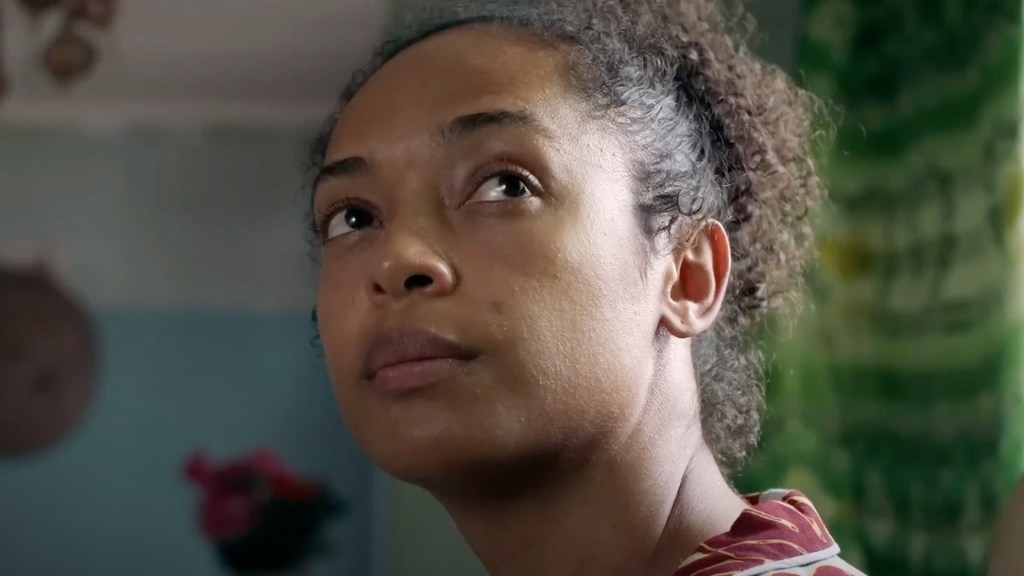
After the first few acts of the film, the tone of On Becoming a Guinea Fowl changes. I understand Nyoni’s intention behind switching tones from the midpoint of the film on; she wanted to further underline the seriousness of the scenario. With that being said, giving the audience similar moments from the first act of the film would not have dulled the sharpness of the commentary in any way. It made me feel uncomfortable for having laughed so much earlier on. Abrupt tone shifts can be effective, but this one felt particularly jarring and changed the viewing experience in a way that may not work for everyone.
The cinematography of On Becoming a Guinea Fowl was another aspect that was a bit of a mixed bag for me. It was beautifully staged and filmed in many moments, but also struggled to find its footing in others. Many scenes in the middle to latter half of the film were simply too dark. The dim lighting and shadows made it difficult to see what was happening, and at times, it was even challenging to determine where certain scenes were taking place. While this could have been an intentional stylistic choice to enhance the film’s mood, it oftentimes detracted from the clarity of the storytelling.
Thematically, On Becoming a Guinea Fowl is an unflinching examination of power dynamics, gender roles, and the oppressive weight of silence. Nyoni masterfully dissects how family loyalty can be both a source of comfort and a vehicle for repression. The acting was also excellent across the entire cast. Susan Chardy delivers a mesmerizing lead performance, capturing Shula’s quiet turmoil with precision and confidence. The supporting cast also delivered outstanding performances and made all of the tricky family dynamics incredibly believable and poignant.
Despite my frustrations with the tonal shift, On Becoming a Guinea Fowl is impressive and effective as a whole. Nyoni’s bold and thought-provoking sophomore effort cements her as a filmmaker unafraid to confront difficult truths in her work.
7.9/10
By: Stefano Todaro



 POPCORN FOR BREAKFAST
Leave a comment