
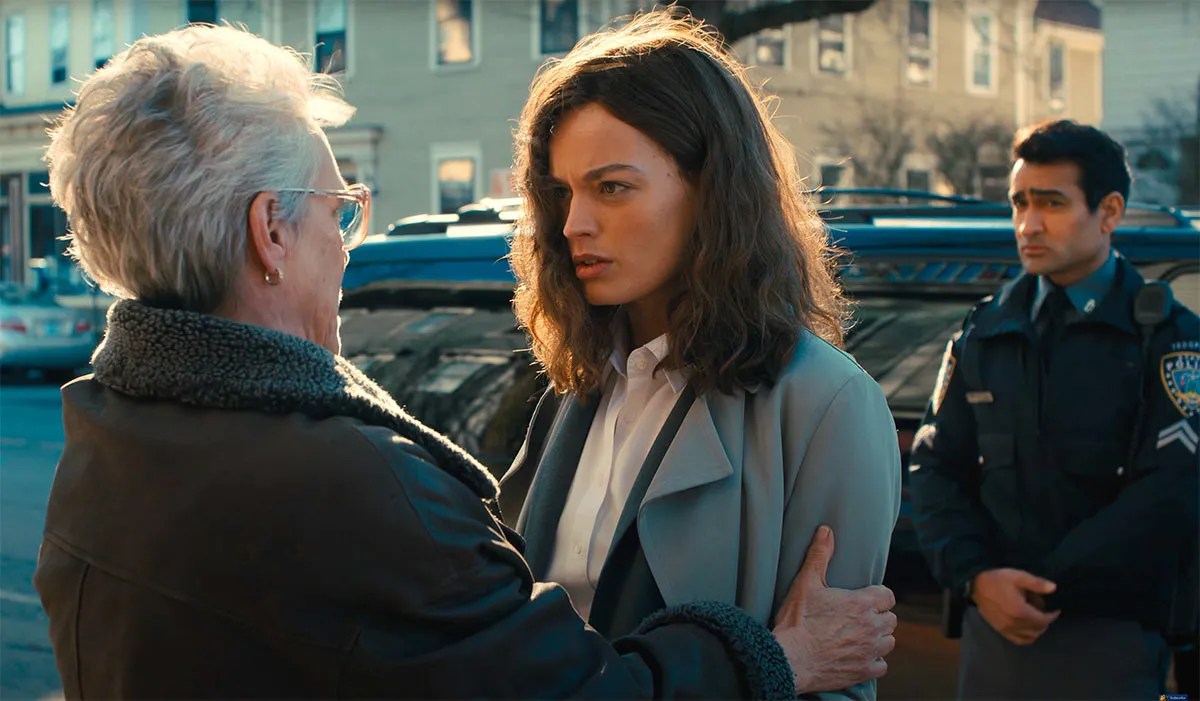
Movie: Ella McCay (2025)
Production Companies: Gracie Films
Distributed by: 20th Century Studios
Producer(s): James L. Brooks, Richard Sakai, Julie Ansell, Jennifer Brooks
Directed by: James L. Brooks
Written by: James L. Brooks
Starring: Emma Mackey, Jamie Lee Curtis, Woody Harrelson, Jack Lowden, Kumail Nanjiani, Ayo Edebiri, Albert Brooks
Review by: Stefano Todaro
Where do I begin with James L. Brooks’ first film in 15 years? While Brooks’ best work is likely behind him, you can’t blame film lovers for being cautiously optimistic about a new Brooks film with such a loaded cast. Even with the risk of sounding hyperbolic, I feel comfortable saying that his latest, Ella McCay, is one of the most baffling wide-release films I’ve seen in the last decade (save for a few horror movie disasters). It’s a rare film where not a single moment, performance, or decision works, all culminating in one of the biggest messes I’ve ever seen on the big screen. What we get is a screenplay so confounding that Ella McCay will be fun to discuss for years to come; it can be used in collegiate film classes as an example of how not to write a screenplay. It’s not bad in the sense that it’s forgettable and boring; it’s bad to the point of feeling necessary to study and dissect.
20th Century Studios has been heavily pushing this film for the last few weeks, and I’m sure a lot of that has to do with the anticipated reception of Ella McCay. Maybe if they advertise enough, they can get enough butts in seats before folks read reviews. Part of what makes the release of this film, and the film itself, even more interesting is that the main trailer and synopsis don’t make it fully clear what Ella McCay is about. In a nutshell, the film is about fictional Lieutenant Governor Ella McCay, played by Emma Mackey, becoming Governor after their unnamed state’s current Governor accepted a cabinet position in the President’s administration. It’s a mouthful, but it’s what happens. This setup is the backbone for the inciting incident and all of the workplace and familial drama that ensues. By the way, it’s 2008. Brooks would like us to think that the time period matters, but really, it’s just used as a crutch to tell an easier story because bipartisan politics still somewhat existed back then.
On paper, it doesn’t sound like the most ridiculous setup for a political dramedy, but what is ridiculous is all of the baggage Brooks litters the film with. Nearly every character we meet has some form of baggage. One character we meet for just a few moments, a member of McCay’s security detail, pleads to his fellow officer that he needs to rig the overtime rules because he’s falling on hard times and has to support a family. This scene is all that we get from this person. Nothing more and nothing less. Does this have anything to do with anything else going on in the film? No. Is it used to paint a better picture of the time period the film is in? Not really. Ella McCay is filled with these awkward and out-of-place throwaway moments that do nothing but make us scratch our heads.
As the film progresses, things get weirder and weirder. Side plots for side characters are introduced that do nothing for the story at large, but also don’t do anything to help us understand our characters better either. It’s like Brooks had a bunch of sticky notes of random ideas on a brainstorming board and grabbed a few of them to throw in. Part of what made this such an engrossing viewing experience was anticipating what would come next; what misplaced conversation or absurd character decision was on deck? Because I want you to have the same experience, I’ll try to keep the specifics to a minimum. The screenplay is something to behold, and the dialogue struggles from the jump.
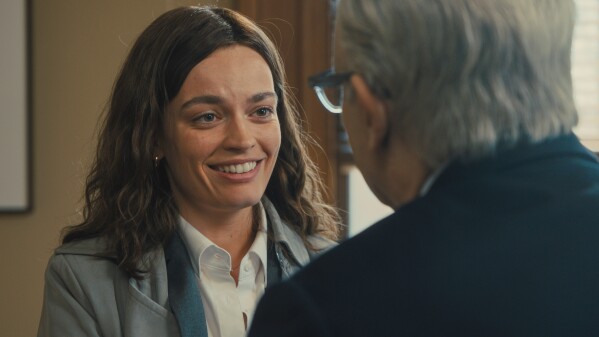
One of Ella McCay’s biggest sins is how much talent gets wasted: Ayo Edebiri is in one scene, Jamie Lee Curtis gives one of her most grating performances ever, and the very talented Emma Mackey is left to drown as she tries her best to carry the film on her back. Even when presented with odd scenarios and character situations, dialogue can be a saving grace, but the dialogue we’re given makes it all worse. In the world of Ella McCay, it’s as if every character is meeting each other for the first time in every scene. Nobody is comfortable around each other, responses to questions don’t make sense, and everybody is just talking too damn much. I can’t describe how uncomfortable the conversations between Mackey and Kumail Nanjiani made me. With all of the talent that was thwarted because of bad writing, one performance sticks out the most, and that is Jack Lowden’s turn as Ella McCay’s husband, Ryan. He feels like a cartoon character. What he says, the decisions he makes, and how he emotes are all shockingly misplaced.
Ella McCay is described as a dramedy, but there wasn’t one funny bone in this film’s body. There were certainly set-ups for jokes and lines that were meant to be jokes, but nothing ever hits; there was just awkward silence after awkward silence every time Jamie Lee Curtis angrily yells something that is meant to be funny. A lot of the failed humor is rooted in humans just not talking like humans, and the world on screen isn’t quirky or unique enough to have its own accepted version of language or humor.
All of this is my way of saying that I enjoyed my experience watching Ella McCay, and I don’t know if we’ll ever see anything like it again. Everybody should run to the theater to see it so we can talk specifics, but don’t ask me for a refund.
Wait, I forgot to talk about the narration that doesn’t make sense!
3.5/10
By: Stefano Todaro

 POPCORN FOR BREAKFAST
Leave a comment