
Movie: Scarlet (2025)
Production Companies: Studio Chizu, Nippon Television, Columbia Pictures
Distributed by: Sony Pictures Classics
Producer(s): Nozomu Takahashi, Yuichiro Saito, and Toshimi Tanio
Directed by: Mamoru Hosada
Written by: Mamoru Hosada
Starring: Mana Ashida, Masaki Okada, Koji Yakusho
Review by: Cam Wiggs
2025 was a year that delivered immense box-office success for animated feature films. From Pixar’s Zootopia 2, which is now the highest-grossing animated film of all-time, to Demon Slayer: Kimetsu no Yaiba – The Movie: Infinity Castle, which became the highest-grossing international feature in U.S. history, there were a ton of high-profile animated features rocking the box office last year. And then there is the subject of today’s review, Scarlet (2025), which, unlike the two films mentioned previously, had a small, unassuming 3-week awards-qualifying theatrical run in December of last year, followed by a wider, domestic release starting this weekend.
Scarlet tells the story of Princess Scarlet (played by Mana Ashida), a Danish royal from the Middle Ages who is forced to reckon with the untimely death of her beloved Father, King Amaleth, who was betrayed and killed by his own brother, Scarlet’s Uncle Claudius (played by Toshimi Tanio). Sound familiar? If that sounds to you like a version of William Shakespeare’s Hamlet, that’s because it is! And if it sounds to you like Disney’s animated masterpiece The Lion King (1994), then you and I just became best friends. Unlike Hamlet and The Lion King, however, Scarlet (both the movie itself and its titular character) takes a treacherous, time-bending trip through the afterlife in a quest for vengeance.
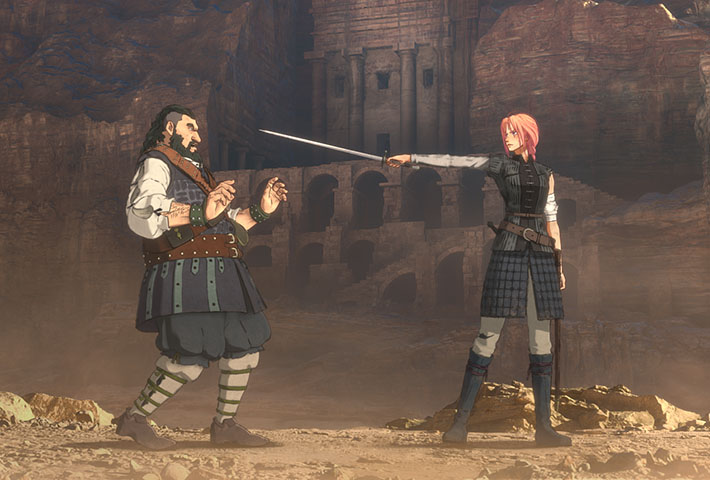
It’s an ambitious take on a timeless classic, to be sure, but not one for which writer and director Mamoru Hosada is unprepared. Hosada, an Academy Award nominee for his film Mirai (2018), is known throughout Japan and the world as an innovator in Anime style and storytelling. He has also taken on classic tales before, specifically his 2021 film Belle, which featured his take on Beauty and the Beast. In Scarlet, Hosada doesn’t pull any punches. In fact, he takes two big, creative swings, resulting in varying degrees of success and/or failure.
Scarlet‘s first creative risk is the animation style. In anime culture, hand-drawn, 2D animation is the norm and the standard. In fact, this style of artwork is revered in Anime and remains the primary art style of Japanese animated films, even with the rise of 3D and CG animation in American films and other films from around the world. So, it is considered a significant creative deviation when an Anime director chooses to go in a different direction. In Scarlet, Hosada does exactly that, opting for a hybrid approach that blends 3D animation with 2D animation techniques, resulting in an aesthetic that is altogether unique from what you’d typically see in this space.
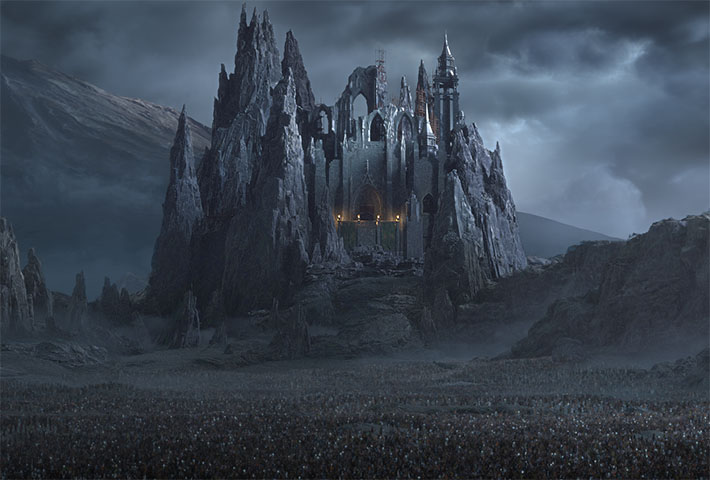
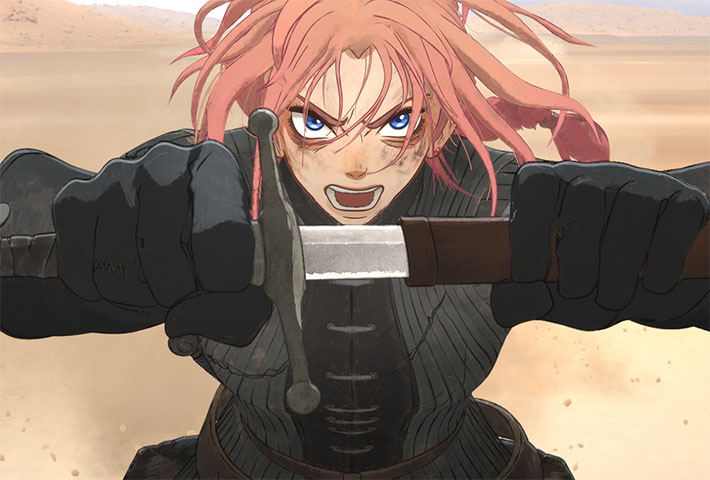
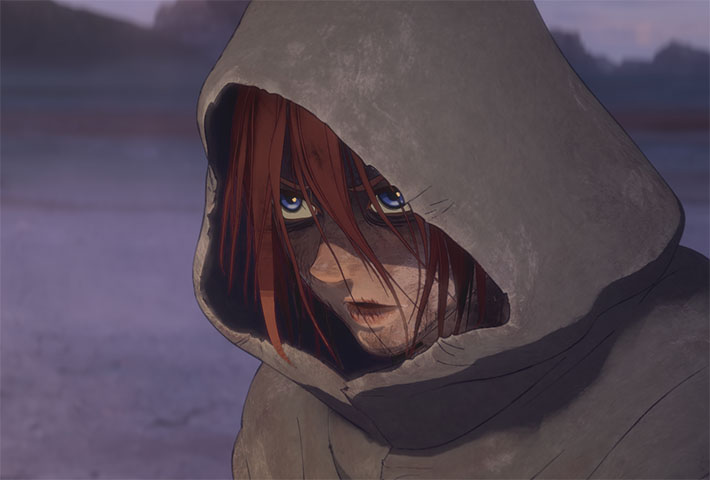
The result of this hybrid animation style, in my opinion, is one of the film’s great successes. For a movie that largely takes place in the afterlife, this somewhat uncanny art style delivers a sense of scale and tension that would have otherwise been difficult to achieve. Additionally, I love the choice of Hosada and team to take full advantage of this approach to deliver a grittier Anime heroine. Typically, female protagonists in anime films and television series are picture-perfect, dainty animated representations of the female form. In Scarlet, we get a fully-fledged character that Hosada was not afraid to portray in an unflattering light. Don’t get me wrong, Scarlet is still a conventionally beautiful depiction of a princess, but the animators’ choices allowing her to have cracked lips, dirty skin, cuts and bruises, as well as allowing her face to express raw sorrow and rage, give this character a depth and authenticity that is uncommon with Anime heroines.
The other big swing taken in Scarlet is the adaptation. As mentioned previously, the film takes the premise of Hamlet in some unconventional directions. For example, during her journey in the underworld, Scarlet comes across a man named Hijiri (played by Masaki Okada) who follows her on her quest. Hijiri is from what we consider present-day Japan, while Scarlet is from medieval Denmark. There are plenty of other deviations to this story that I will keep to myself in the interest of remaining spoiler-free. That said, this is still Hamlet, and with that comes an element of predictability that hurts the effectiveness of this film.
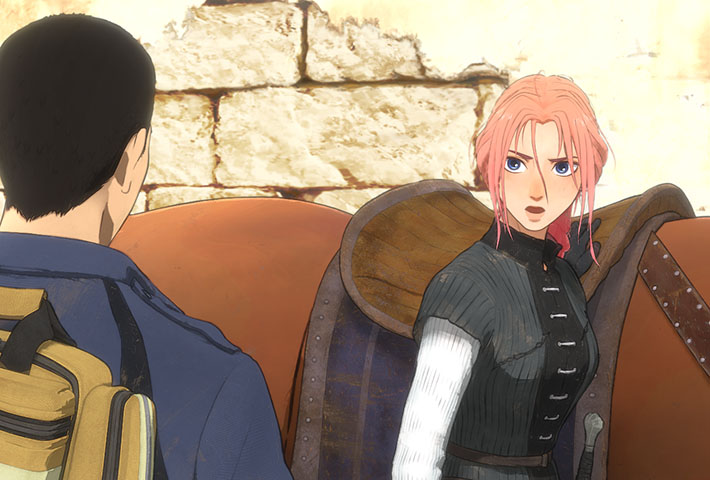
To be clear, predictability does not guarantee a bad story. The idea that “predictability equals bad” is one of the biggest misconceptions I consistently see in film or literary analysis. Many stories have been told and retold for hundreds of years, never overstaying their welcome, and Hamlet is one of them. It is certainly possible to tell a story that has been told before, especially if you give it your own spin. The problem with predictability comes in when you overindulge. And overindulgence is the primary sin Hosada commits in Scarlet. The film simply lingers too long on shots or scenes where the audience knows the outcome. This creates an extreme risk for breaking the audience’s suspension of disbelief as they check out of a scene because it is taking too long to get to the point, or it is trying to manufacture emotion that is simply not there. It’s a mistake that can cause a 1-hour and 52-minute film like Scarlet feel like 3 hours, and it is a surefire way to lose an audience.

Still, for as many times as I checked out during overly long scenes of dialogue or shots that lingered far too long to remain effective, the charm and realness of Scarlet‘s characters pulled me back in more often than not. It’s a rugged, inventive take on a classic story and one that, despite its occasional storytelling and pacing failings, I still enjoyed. Mamoru Hosada’s big swings delivered some very compelling sequences, and that’s enough to make Scarlet a film any anime fan should check out.
6.0/10
By: Cam Wiggs


 POPCORN FOR BREAKFAST
Leave a comment