

Movie: Queer (2024)
Production Companies: Fremantle North America, The Apartment Pictures, Frenesy Film Company
Distributed by: A24
Producers: Lorenzo Mieli, Luca Guadagnino
Directed by: Luca Guadagnino
Written by: Justin Kuritzkes (screenplay), William S. Burroughs (novel)
Starring: Daniel Craig, Drew Starkey, Jason Schwartzman
Review by: Stefano Todaro
We want our movies to show and not tell, but that’s not to say that plainly giving the viewer information is unacceptable. In the case of Luca Guadagnino’s Queer, I was starving for some showing or some telling to provide the proper character and setting context but, ultimately, I was left hungry once the credits rolled. Character and purpose ambiguity can be expected of more avant-garde films or visual tone poems, but for a film like Queer to revolve around a seemingly interesting main character to give us so little to care about in the end was frustrating. In an attempt to avoid spoon-feeding his audience, Guadagnino left his viewers in the dark, giving Queer an air of condescension that nearly negated the elements I did appreciate and enjoy.
Guadagnino’s storytelling and filmmaking style aren’t for everybody, but I’ve undoubtedly enjoyed more of his work than not. The Guadagnino elements that I love enveloped the screen for the first 45 minutes of Queer. The set designs are stunning, and the haziness and muted color pallet work brilliantly in our 1950s Mexico City setting. We only meet a few characters, we only step foot in a few places, and the circumstances are mysterious; it all feels like a beautiful dreamscape, even if Daniel Craig’s William Lee character is clearly emotionally wounded. Everything I admired and loved so much about the first third of the film was ripped away in the final two acts. Not all of the blame can be put on Guadagnino. The film is based on William S. Burroughs’ novella of the same name. I haven’t read the book, but from what I was able to find, the film stays mostly true to the semi-autobiographical source material.
Without spoiling the journey that ensues, it’s important to know that Lee leaves Mexico City for South America to find a plant he’s interested in. Yes, a plant. Once we leave Mexico, the sense of wonder and the impressive set design leave with it. Lee felt like an interesting enigma of a man early on, but his journey and the information we learn later on felt meaningless, especially considering the setup of the film. Not every film that centers around a main character needs to be a story of growth or discovery, but something is amiss when we care so little about the outcome of said character (especially when it’s so easy to buy in during the first third of the film).
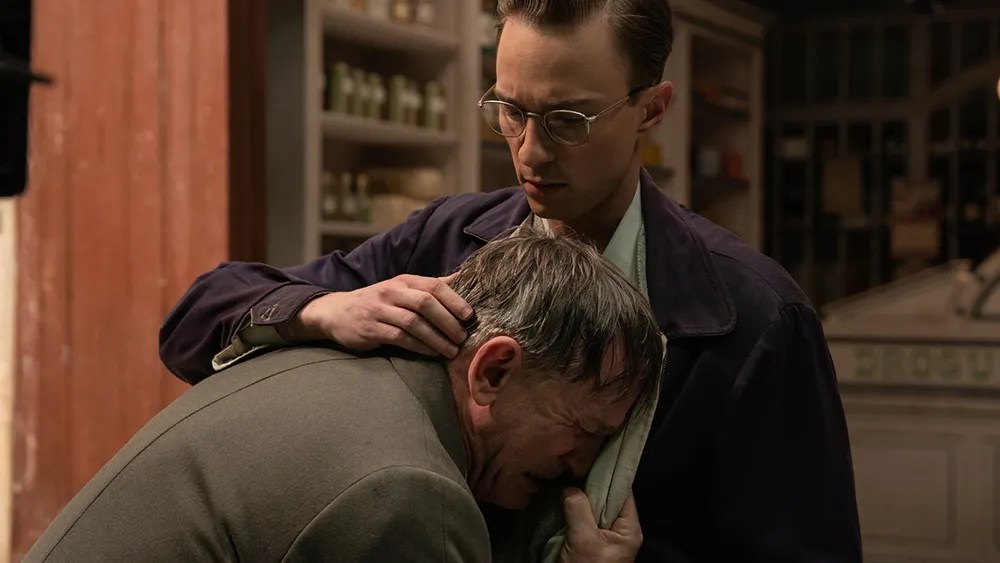
Queer also gets a lot uglier along the way. Maybe it was a lack of budget, or maybe it was a lack of care, but a lot of distracting CGI is used to fill in the scenery. Rather than quirky and interesting designs, maybe something we’d get from a Yorgos Lanthimos film or from the mind of Julio Torres, we get questionable and out-of-place buildings, cars, landscapes, and animals. You might not ever see an uglier CGI snake in your life. It was a disappointing departure from the practical Mexico City sets.
For all of the downfalls of Guadagnino’s second 2024 film, there are still elements of Queer that worked for me. On top of the aforementioned set design and all-around feel of the Mexico City sequences, Daniel Craig’s performance as Lee is truly something to behold. So much so that I think this movie completely falls apart without his command and comfort in the role. Craig’s physicality and line delivery are natural to the point of invisibility, and it continues to push the fact that Craig is one of the finest acting talents we have today. Jason Schwartzman’s character work as Joe Guidry needs to be mentioned as well. Schwartzman is potentially one of the film industry’s most unsung heroes, and Queer shines and recalibrates anytime he’s on screen. Although it isn’t a comedy, he is at the core of this film’s funnier moments.
My hesitancies all boil down to the expectations Guadagnino had for his audience. William S. Burroughs and his novella Queer might be well known to some, but the writer and his work are not nearly part of the American literary canon enough to warrant a film with so much ambiguity and such little context. How are we expected to read between the lines of who William Lee really is if we haven’t read the novella or didn’t read William S. Burroughs’ Wikipedia page beforehand? What does Lee do for a living? Why does he care so much about a plant? How can he sustain his specific lifestyle? It might be unfair to interrogate a film about such granular aspects, but when a film is so focused on the specificity of a character’s day-to-day lifestyle and the makeup of their emotional well-being, those questions become fair game if we aren’t given answers. I would feel differently if we were given the opportunity to discover those answers for ourselves, but alas, we were instead treated to a needlessly nebulous epilogue that only added to the questions; it’s self-satisfaction at its finest.
6.6/10
By: Stefano Todaro


Leave a Reply