
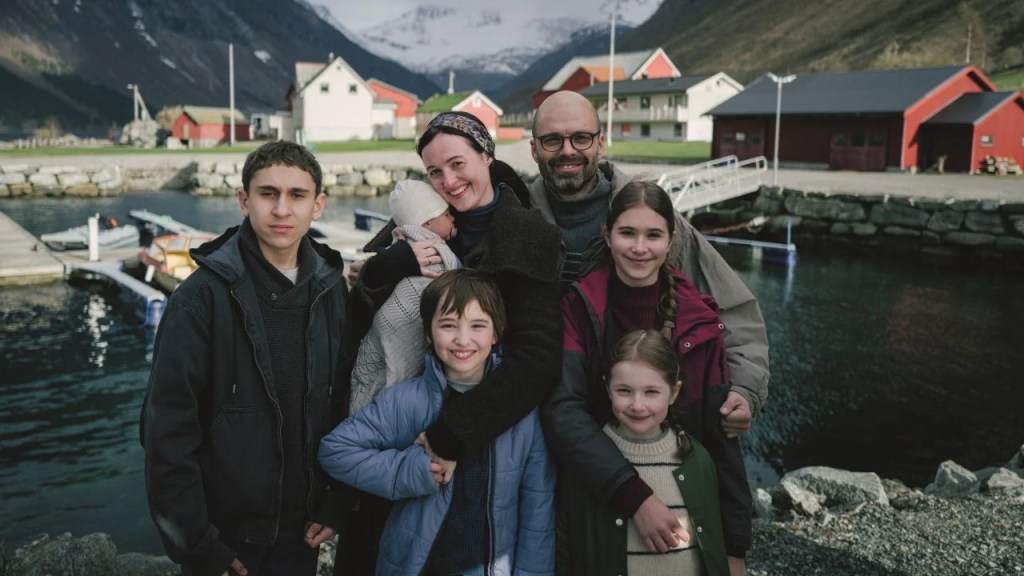
At the center of Cristian Mungiu’s Fjord is a deeply unsettling family crisis: a husband and wife, the Gheorghius, have their children taken away by Norwegian child protection authorities on suspicion of abuse. Their case unfolds as a clash of cultural and religious values; the family’s deeply conservative worldview puts them at odds with the more liberal community around them. The film explores the blurry intersection of parental rights, institutional authority, and competing morals. Fjord is trying to ask us how much of the family’s conflict is rooted in legitimate concern and how much in prejudice against their beliefs.
At a high level, I appreciate what Fjord is attempting to accomplish, particularly its willingness to engage with a complicated subject without immediately settling for easy answers. There is great tension in the film’s central conflict: a family whose values are, in many respects, deeply objectionable can still be the victim of an unjust process. Mungiu is interested in the uncomfortable possibility that recognizing the latter does not require excusing the former. It is a worthwhile premise, there’s no doubt about that.
Sebastian Stan and Renate Reinsve are both as excellent as ever, delivering naturalistic performances that feel entirely at home in the film’s world. Their work is understated but compelling, allowing the emotional strain of the situation to emerge through small gestures and subtle shifts in demeanor rather than dramatics. Mungiu’s observational approach is particularly effective in the film’s more intimate moments, including the outstanding relationship that develops between Elia, one of the Gheorghiu daughters, and her neighbor and friend Noora. Their dynamic provides some of the film’s most affecting character work, offering a glimpse of the emotional world that exists beyond the ideological battle consuming the adults around them.
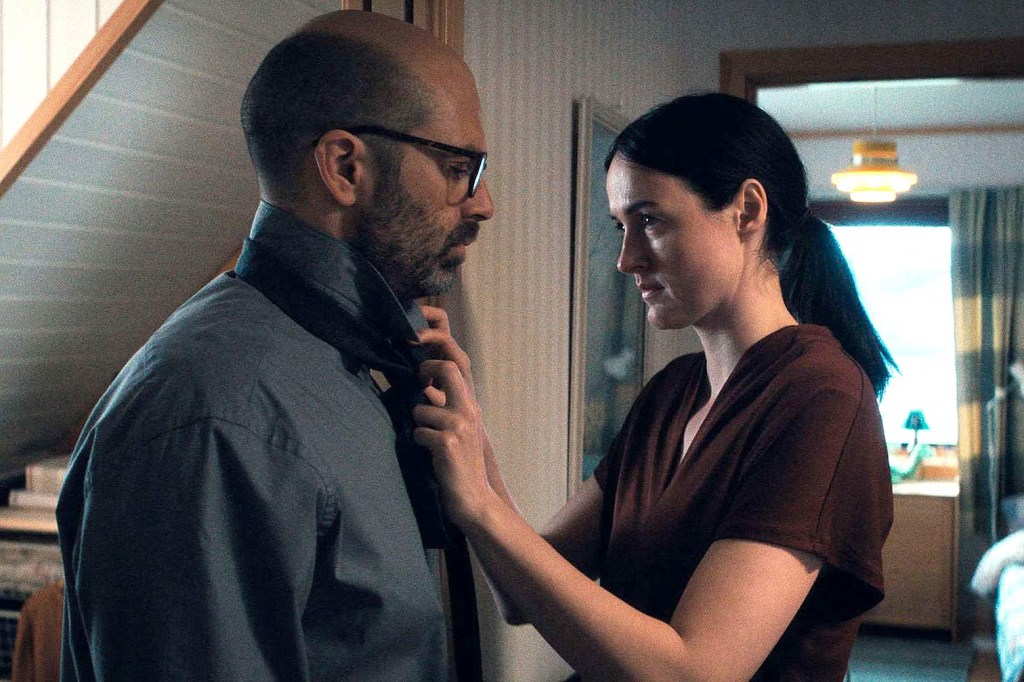
Where Fjord becomes more troubling, however, is in its understanding of nuance. Or at least how I personally interpreted the nuance. The film’s central argument seems to be that the Gheorghius can hold deeply conservative, even abhorrent, beliefs while still being treated unjustly by the institutions and individuals who oppose them. That is a perfectly valid distinction to explore. Unfortunately, Mungiu spends so much time portraying the family’s more liberal critics as cruel, judgmental, and morally compromised that the film begins to feel less like a nuanced examination of competing worldviews. It unfortunately feels more like an ideological rebuke.
To be clear, the film makes a persuasive case that the Gheorghius are receiving profoundly unfair treatment in their child protection proceedings. In my estimation, they are being treated horribly and should have never had their children taken away from them. Taking their children away feels unfair, and it’s hard to ignore the possibility that the family is being judged because of their beliefs. The film’s sympathy for the family sometimes makes it harder to separate two things: they may be treated unfairly, but that doesn’t make their beliefs any less troubling. The Gheorghius’ extremely conservative worldview is not merely an incidental detail that can be set aside once their case becomes sympathetic. It is central to who they are, and their perspective deserves to be confronted with greater clarity.
To Mungiu’s credit, he does not simply present Mihai Gheorghiu, played by Stan, as an uncomplicated hero. There are moments when Mihai openly expresses his views, making it harder to fully sympathize with him. These moments suggest that Mungiu understands the contradictions at the heart of his protagonist. Still, I wish the film were more deliberate in distinguishing sympathy for Mihai’s circumstances from an endorsement, or even an inadvertent rehabilitation, of his beliefs.
This isn’t something to ignore, especially considering how audiences might interpret Fjord. The film can be seen as a warning against institutions abusing their power and judging people for their beliefs. However, viewers who already believe conservative Christians are being persecuted by liberal institutions could interpret the film in a much simpler way: the family is right, its opponents are cruel, and its beliefs are simply being unfairly attacked. Of course, a film cannot prevent every possible misinterpretation, but when dealing with such a politically charged subject, it is important to make the distinction between exploring different perspectives and failing to clearly address the problems with them.
My other reservation concerns where the film ends up. In its latter portions, Fjord moves increasingly toward courtroom drama, a shift that feels less compelling than the domestic tension the film establishes earlier on. I found myself wishing Mungiu had spent more time inside the Gheorghiu family home, exploring the prolonged emotional devastation of having one’s children taken away. The parents are separated from their children for months, yet we see relatively little of the period between the removal and their court appearances. That absence feels particularly significant in a film so interested in the consequences of institutional power. The procedural and the legality of the case is important, but the family’s private suffering is where the material seems to hold the greatest dramatic potential.
Ultimately, Fjord is a mostly thoughtful, and well-acted film. It also looked excellent. Mungiu explores a genuinely interesting moral issue, while Stan and Reinsve deliver natural and convincing performances. However, the film’s attempt to explore the relationship between ideology and injustice sometimes oversimplifies things. By making some of its characters so unsympathetic, Mungiu makes it harder to see the distinction between the family being treated unfairly and their beliefs being deeply troubling. Fjord works best when it allows these contradictions to exist side by side. I only wish it had trusted its own complexity more, rather than presenting the conflict in a way that sometimes undermines the very nuance it is trying to achieve.
6.9/10
Movie: Fjord(2026)
Production Company: Mobra Films, Why Not Productions, Eye Eye Pictures, Snowglobe Film, Aamu Film Company, Filmgate Films
Distributed by: NEON
Producer(s): Cristian Mungiu, Tudor Reu, Andrea Berentsen Ottmar, Dyveke Bjøkly Graver
Directed by: Cristian Mungiu
Written by: Cristian Mungiu
Starring: Sebastian Stan, Renate Reinsve
Review by: Stefano Todaro


Leave a Reply