
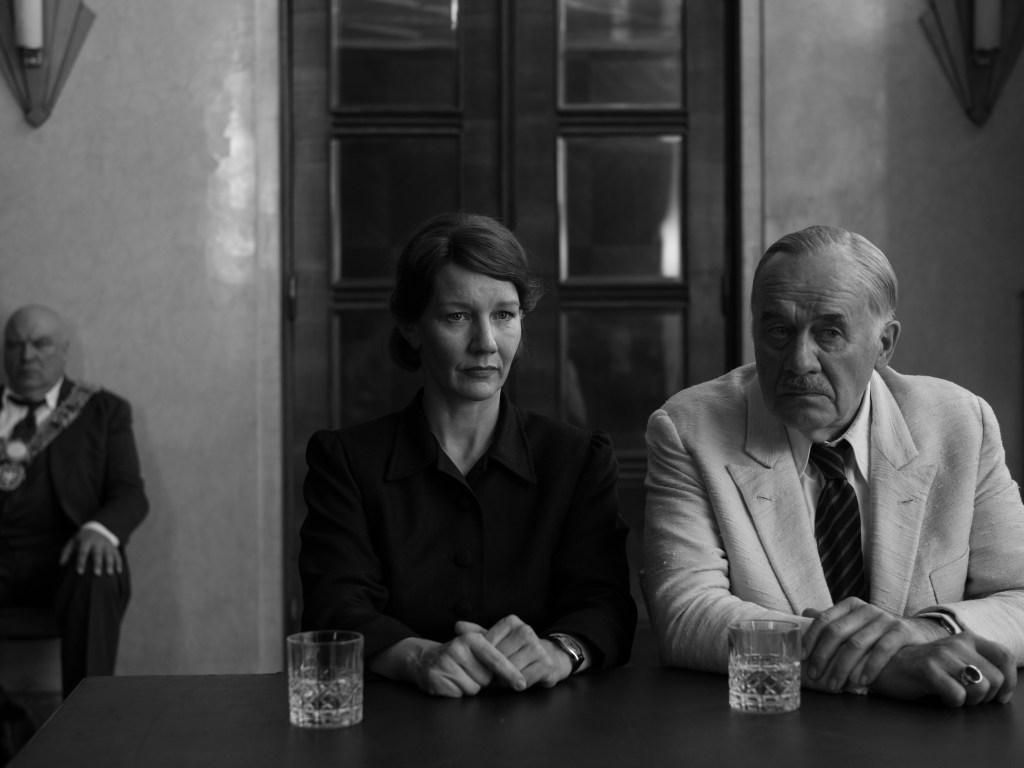
It’s been eight years since Polish filmmaker Paweł Pawlikowski released Cold War, and in that time, anticipation for his next film has only continued to grow. Following the Oscar-winning Ida and the Oscar-nominated Cold War, Pawlikowski returns with Fatherland, the third installment in what has become something of an unofficial trilogy exploring the historical, cultural, and emotional wounds of postwar Europe. And given just how well-made his previous two films were, it’s difficult not to approach Fatherland with some pretty lofty expectations.
Set in the summer of 1949, Fatherland follows Nobel Prize-winning German author Thomas Mann, played by Hanns Zischler, and his daughter Erika, played by Sandra Hüller, as they embark on a road trip across a war-torn Germany. Returning to his homeland for the first time in 16 years after fleeing the rise of the Nazi regime, Thomas finds himself confronted with a country that is now divided between East and West, and struggling to come to terms with its own tumultuous past. As the two travel from American-controlled Frankfurt to Soviet-controlled Weimar, their journey becomes as much about navigating their complicated family relationship as it is about confronting the history of a country they once called home.
Where I think Fatherland works particularly well is as a relationship study between a father and daughter who are both carrying a considerable amount of emotional baggage. As they grapple with the loss of their son and brother, respectively, old wounds are reopened, unresolved tensions come to the surface, and there’s a sense of both people trying to find some common ground after years of distance. It’s a complicated relationship, and I really appreciated how the film explores the ways in which grief can simultaneously drive people apart and bring them closer together.
The historical side of things is certainly intriguing, and I appreciate the perspective Pawlikowski brings to postwar Germany. However, I do think some of the film’s historical and political context can create a bit of a barrier for viewers who aren’t particularly familiar with the period or Thomas Mann himself. Postwar Europe isn’t exactly an unfamiliar setting for historical cinema, but telling this particular story through the lens of Mann’s life, legacy, and cultural significance adds another layer that can make the material feel somewhat inaccessible. I found myself appreciating what the film was exploring, even when I wasn’t always fully connecting with the historical and political dimensions of it.
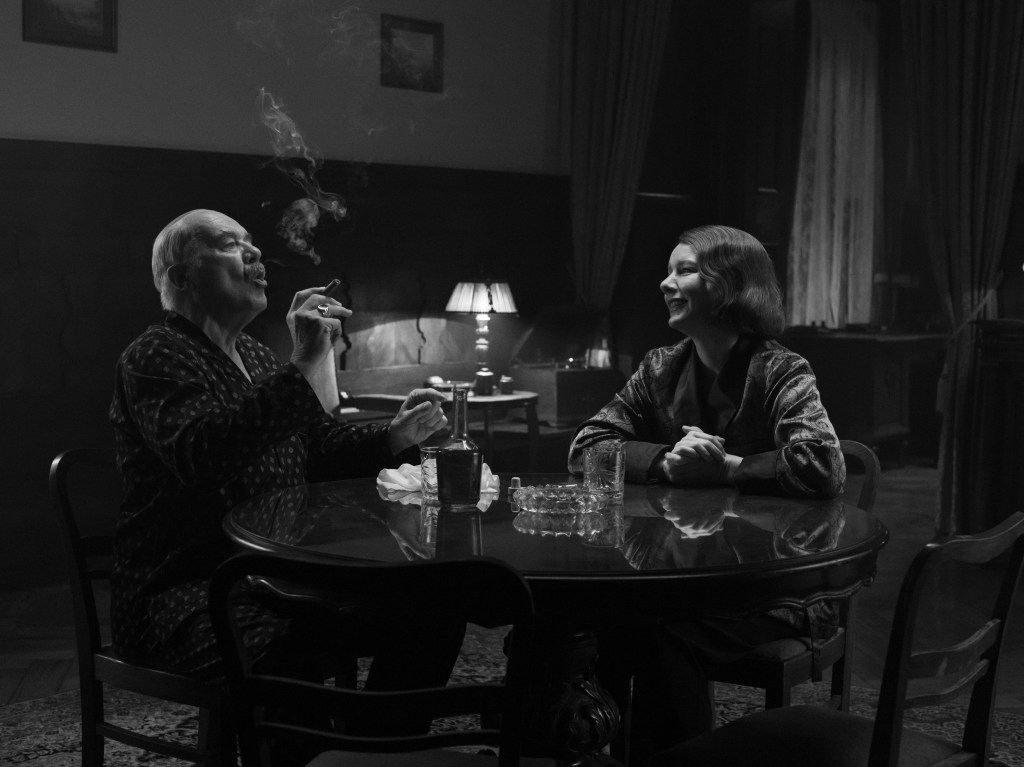
That historical exploration does make for a film that can feel a little dry and, at times, even somewhat boring. When the conversations are at their most engaging, there’s a lot to chew on, but there are stretches where the dialogue and subject matter become a little less compelling. It’s not necessarily that the dialogue is ineffective or poorly written, but rather that some of these conversations are simply more interesting than others, particularly when you’re not entirely familiar with the historical context behind them. Thankfully, the performances are consistently sharp and impressive, with the cast finding plenty of nuance and making even the film’s more understated exchanges worth watching.
On a visual level, Fatherland is an absolutely beautiful film. Pawlikowski’s direction is consistently compelling, and the cinematography is easily one of its greatest strengths. There are some genuinely harrowing images throughout, made all the more striking by the decision to shoot the film in black and white. The stark contrast between light and shadow gives these moments an added sense of weight, while also reinforcing the bleakness of the world these characters are moving through. Even when the film’s conversations occasionally struggled to hold my attention, it’s difficult not to be drawn in by just how beautifully everything is put together.
Ultimately, Fatherland is a film I find myself admiring more than I necessarily love. There’s a lot to appreciate in what Pawlikowski has put together, and his ability to find beauty and meaning in such a bleak period of history is certainly commendable. However, I also found it difficult to fully connect with some of the material, and there are stretches where the film struggles to maintain its momentum. Even so, there’s something quietly affecting about the experience, and it’s another reminder that Pawlikowski is a filmmaker with a remarkable eye and a distinct approach to telling these kinds of stories.
7.2/10
Movie: Fatherland (2026)
Production Companies: Our Films, Extreme Emotions, Nine Hours, Chapter2 Distributed by: MUBI
Producers: Lorenzo Gangarossa, Dimitri Rassam, Edward Berger, Jeanne Tremsal, Ewa Puszczyńska, Mario Gianani, Lorenzo Mieli Directed by: Paweł Pawlikowski
Written by: Paweł Pawlikowski, Henk Handloegten
Starring: Jeon Do-yeon, Sul Kyung-gu, Zo In-sung, Cho Yeo-jeong
Review by: Stefano Todaro



Leave a Reply